Keeping your home energy-efficient and comfortable starts with the right insulation. Homeowners often wonder which is better: spray foam or fiberglass insulation. At E&T Contracting, we help you choose the best solution for thermal protection, energy savings, and moisture control.
The right home insulation ensures consistent indoor temperatures, reduces energy costs, and protects your home from water infiltration and drafts. Our team provides expert installation, budget assessments, and guidance from a certified installer to maximize efficiency and durability.
What is Spray Foam Insulation?
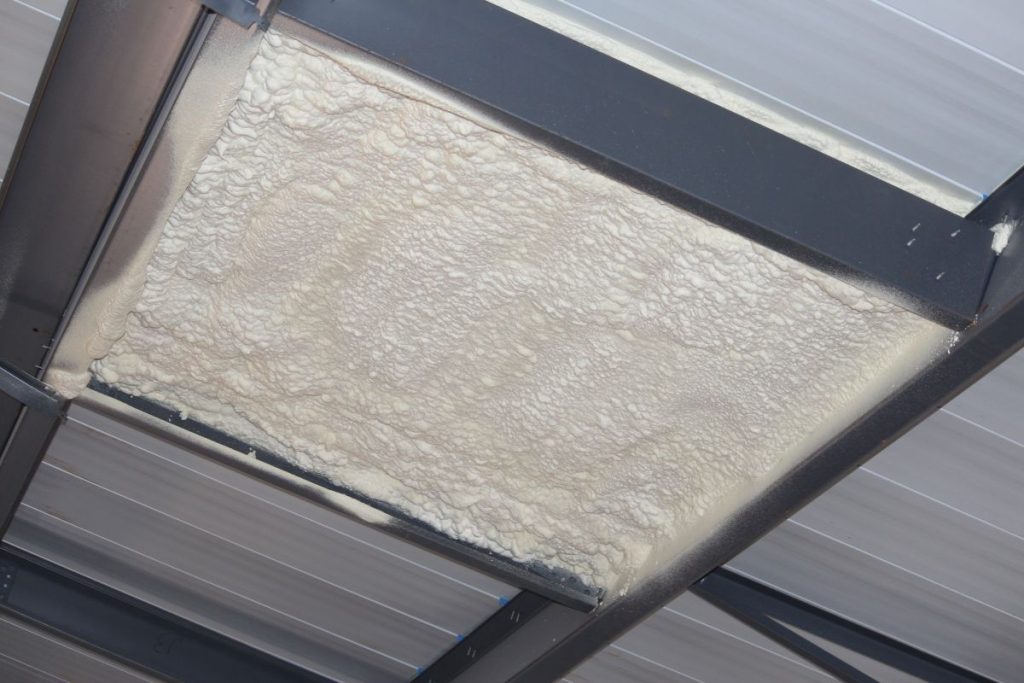
It is a high-performance insulation material created by combining two chemicals that expand on contact. When sprayed onto surfaces, it transforms into a rigid foam that tightly seals gaps, cracks, and cavities. This creates an air and vapor barrier, significantly improving energy efficiency, indoor comfort, and temperature control.
This insulation is categorized into two types:
Open-Cell Spray Foam
This is a lightweight, flexible insulation made with tiny air-filled “open” cells that allow the material to expand dramatically – often over 100 times its size. Because it expands so much, it’s excellent for filling hard-to-reach areas, irregular cavities, and framing gaps.
Its lower density makes it more affordable than closed-cell options, and it provides strong sound absorption, helping reduce noise transfer between rooms. While it offers good insulation performance, open-cell options are vapor-permeable, meaning they don’t act as a moisture barrier and are best suited for interior use where humidity levels are controlled.
Closed-Cell Foam
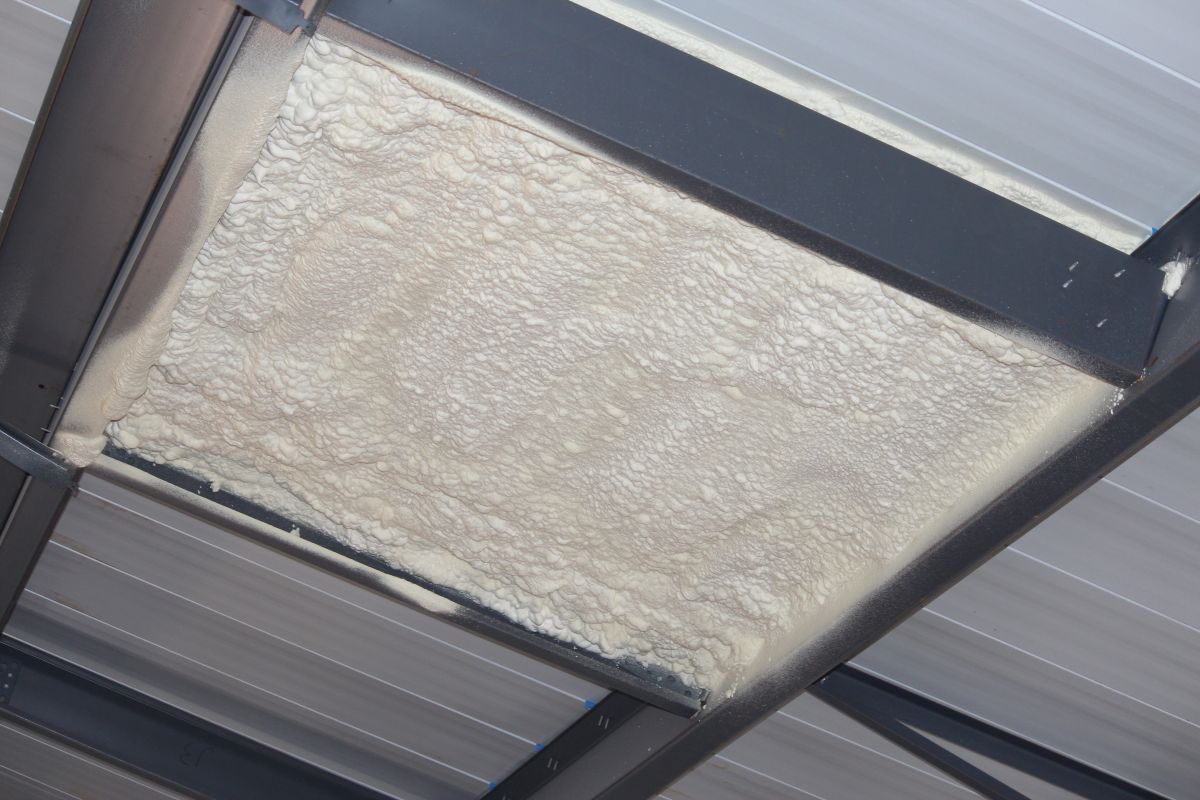
It is dense, rigid, and made of tightly packed “closed” bubbles, giving it a much higher R-value per inch than open-cell options. Because of its density and structure, it strengthens walls, adds structural rigidity, and acts as both an air barrier and a water vapor barrier.
This makes it ideal for basements, crawl spaces, metal buildings, exterior walls, and any area exposed to moisture. The closed-cell option is more expensive but delivers superior energy efficiency and durability, making it a strong choice when space is limited or maximum insulation performance is required.
How Spray Foam Works
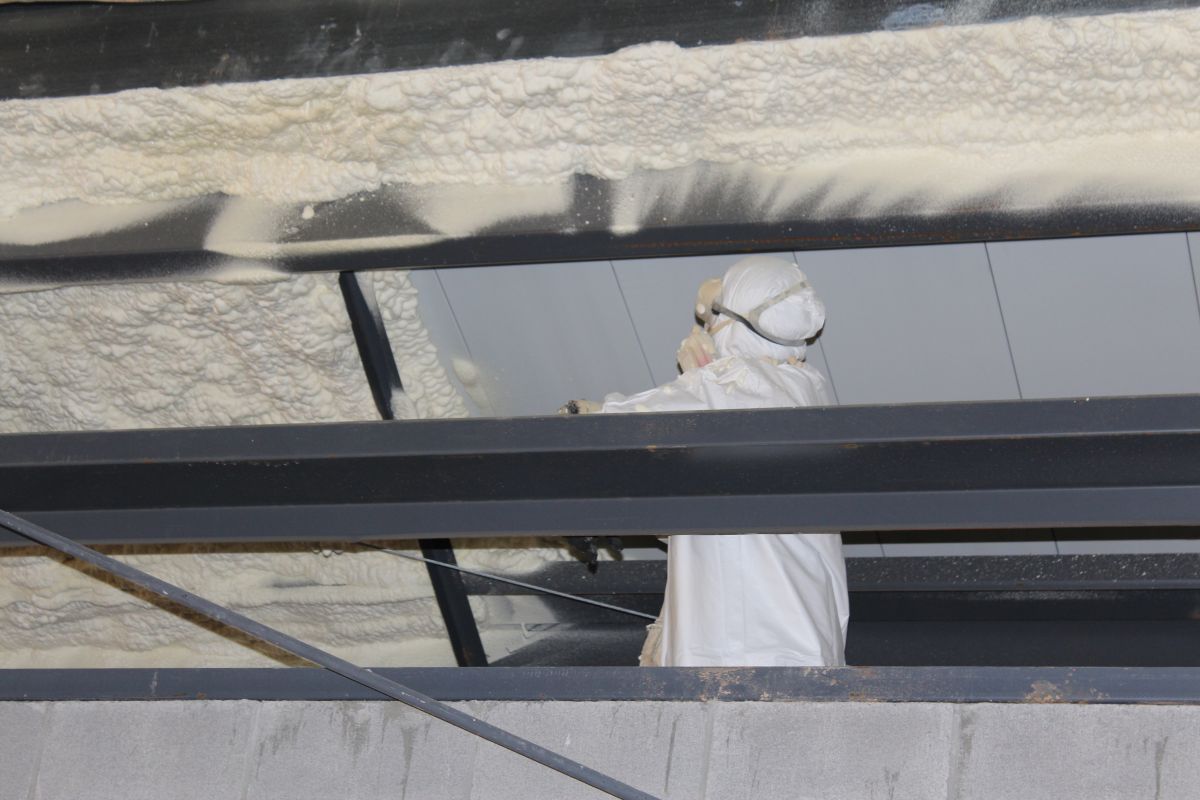
Spray foam insulation works by combining two liquid components – an isocyanate and a polyol blend – that mix at the spray nozzle and expand instantly into a thick, protective foam. As the foam grows, it fills cracks, seams, and gaps, creating a continuous air barrier that blocks heat loss, drafts, and moisture infiltration.
Once cured, the foam forms a solid insulating layer that adheres tightly to surfaces, improving energy efficiency, indoor comfort, and long-term durability far more effectively than traditional insulation materials.
Benefits of Spray Foam Insulation
Some benefits you’ll reap from spray foam insulation include:
- Dramatically improves energy efficiency by sealing air leaks and controlling heat flow.
- Adds strength and durability to building structures (especially closed-cell).
- Reduces the risk of mold, allergens, and dust entering from the outside, since the polymer foam provides no food source for mold or bacteria.
- Long-lasting since the material doesn’t degrade or lose shape over time.
- Suitable for hard-to-insulate areas, irregular shapes, and tight cavities where typical insulation might fall short.
What is Fiberglass Batt Insulation?
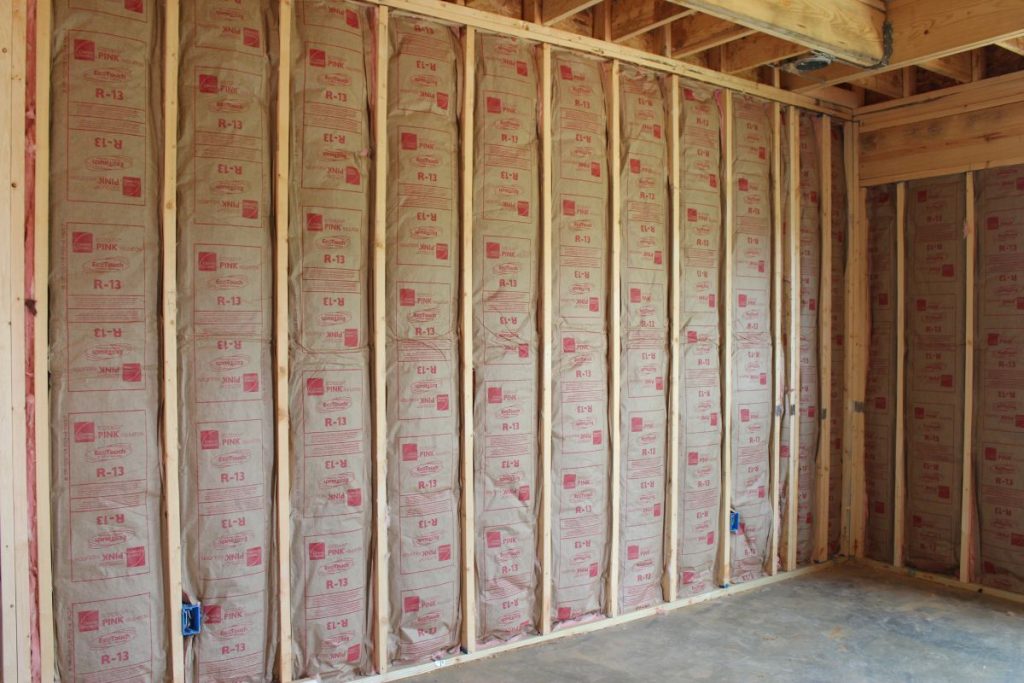
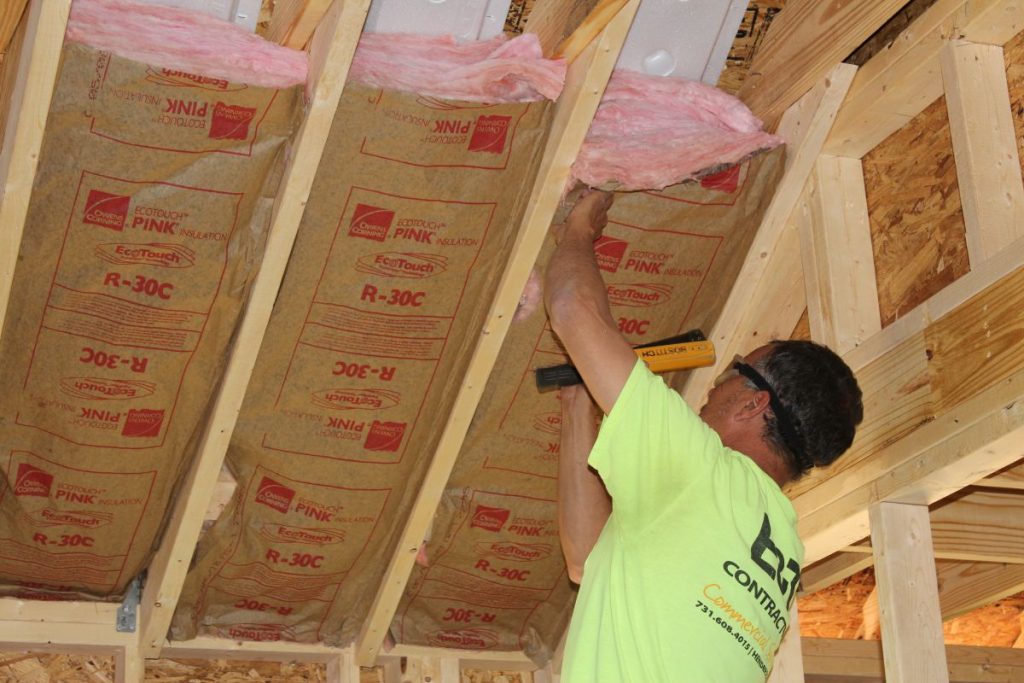
Fiberglass batt insulation is made from fine spun glass fibers formed into pre-cut blankets, called batts. These batts fit standard wall, floor, and ceiling cavities, making them easy to install in new builds and renovation projects. They work by trapping air pockets to slow heat transfer, and help improve energy efficiency and maintain comfortable indoor temperatures.
Beyond thermal performance, fiberglass batts also help reduce noise and offer natural fire resistance since glass fibers do not burn. Fiberglass remains a widely available and cost-effective insulation option for residential and commercial buildings.
Benefits of Fiberglass Insulation
Some of the benefits of fiberglass batt insulation include:
- Lower upfront cost compared to spray foam
- Quick and straightforward installation process
- Available in standard wall cavity thicknesses
- Fire-resistant and non-combustible
Fiberglass insulation performs best in areas that are already well-sealed, where air infiltration is minimal. While it delivers solid thermal insulation, additional moisture barrier measures may be needed in humid environments.
Fiberglass vs. Spray Foam Insulation
Choosing the right insulation affects energy efficiency, comfort, and long-term costs. Here’s a comparison:
R-Value & Thermal Protection
R-value indicates an insulation material’s resistance to heat transfer. Closed-cell spray foam insulation typically provides R-6 to R-7 per inch, offering excellent thermal protection and helping maintain consistent indoor temperatures.
Fiberglass batt insulation generally has a lower R-value of R-2.9 to R-3.8 per inch, providing adequate thermal insulation but performing less efficiently in extreme climates.
Air Sealing & Thermal Breaks
Spray foam insulation acts as a strong sealing barrier, preventing air infiltration and creating a thermal break between indoor and outdoor environments.
Fiberglass insulation does not naturally block airflow and usually requires a vapor barrier to improve performance, especially in attics or areas where effective attic insulation is needed.
Moisture Resistance
Closed-cell foam insulation resists moisture, helping prevent mold and water infiltration. Fiberglass batt insulation can absorb water if exposed to it, so proper installation and a vapor barrier are essential to maintain efficiency.
Cost & Installation Costs
Spray foam insulation requires higher upfront costs due to the material and professional installation costs. However, its superior thermal insulation and energy savings often offset the initial installation costs over time.
Fiberglass is more budget-friendly and can be installed by DIY homeowners, though its long-term efficiency is slightly lower.
Longevity
Spray foam maintains performance over many years with minimal settling. Fiberglass batt insulation may settle or compress over time, reducing effectiveness and possibly requiring maintenance or replacement.
When to Choose Spray Foam or Fiberglass Insulation
Choosing the right insulation depends on your home’s climate, structure, and budget. Understanding the strengths of each type can help you maximize energy efficiency and comfort.
Spray Foam Insulation is Ideal For:
- Extreme climates: Maintains consistent temperatures year-round with superior thermal regulation
- Drafty or moisture-prone areas: Reduces air infiltration and acts as a reliable moisture barrier
- Spaces needing energy efficiency and structural support: Closed-cell foam adds rigidity while providing excellent thermal protection
Fiberglass Batt Insulation is Ideal For:
- Budget-conscious projects: Lower upfront costs
- Standard walls, attics, and crawl spaces: Performs well in already well-sealed spaces
- Areas with minimal air leakage concerns: Provides good thermal insulation in spaces without extra sealing
Upgrade Your Home’s Comfort with E&T Contracting
Choosing the right insulation is essential for long-term comfort, energy efficiency, and thermal protection. But no matter your choice, following proper installation instructions and working with a professional installer from E&T Contracting ensures optimal performance.
Contact us today for a consultation and cost assessment to determine which insulation is the right fit for your home.